Thin Crust Pizza Dough
This post contains links to affiliate websites, such as Amazon, and we receive an affiliate commission for any purchases made by you using these links. We appreciate your support!
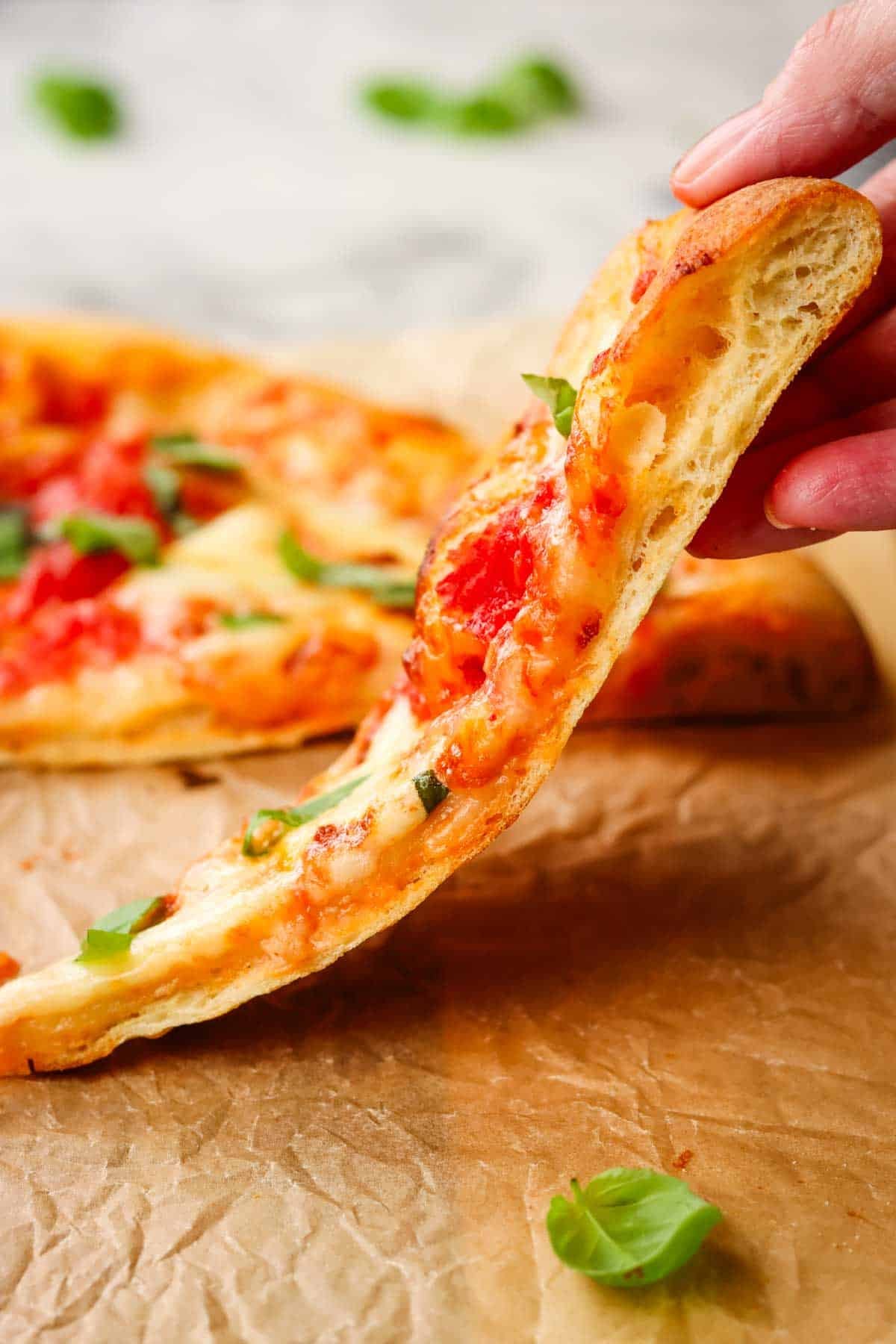
Chewy, flavorful, and as thin as you want it to be, this is the ultimate thin crust pizza dough. The recipe is based on this favorite pizza dough we’ve been making for over 20 years!
Ok, it goes without saying that I don’t post anything on my website if I don’t love it. But if I had to choose a single recipe as my proudest accomplishment, it would be my semolina pizza dough recipe. It also happens to be the one recipe I’ve made so often with zero modifications (and I’m a notorious recipe-fiddler) that I could do it in my sleep, no question.
But a couple of years ago, it occurred to me that with just a couple of little tweaks, I could turn my perfect standard pizza dough into a soft and plush thick crust version that would stand up to a hefty load of toppings, and this thick crust pizza dough was born.
And THEN more recently it occurred to me that with a couple of different tweaks (mainly to the rising time and yeast amount), we could have a thin crust version that would be perfect for showcasing more delicate toppings (see margherita pizza).
And here we are! This is my ultimate thin crust pizza dough recipe.
Why You’ll Love This Thin Crust Pizza Dough
Now, just to set expectations here, what we’re after is NOT an extremely thin, soft and somewhat floppy Neapolitan-style pizza. Although obviously delicious, this kind of pizza requires a specialized oven that will go to extremely high temperatures (like up to 1000F). Rather, it’s closer to a New York-style pizza, but a little more chewy.
Like the other iterations of this pizza dough, it is super simple to make and pretty casual (no flying pies with flour covering everything around here). It does however involve a longer rising time, since less yeast is used, so you’ll need to get started a couple of hours ahead of when you plan to use it. You can also make it the day before and let it rest overnight in the fridge (this builds even more flavor!).
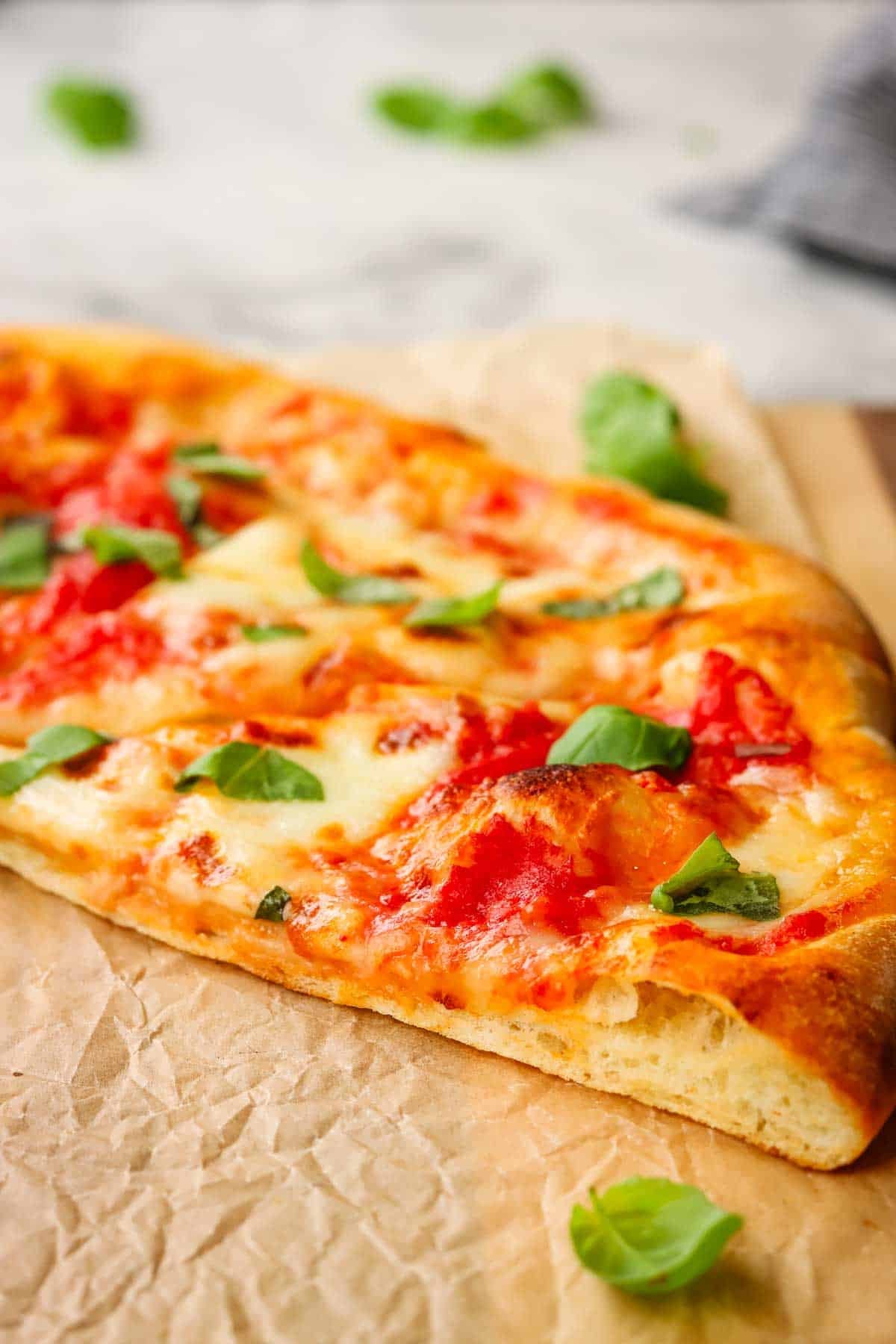
This dough makes a fantastic pizza base, having just the right texture of crusty and chewy, and toasting up to a lovely golden crust. It’s super simple to make and very easy to work with.
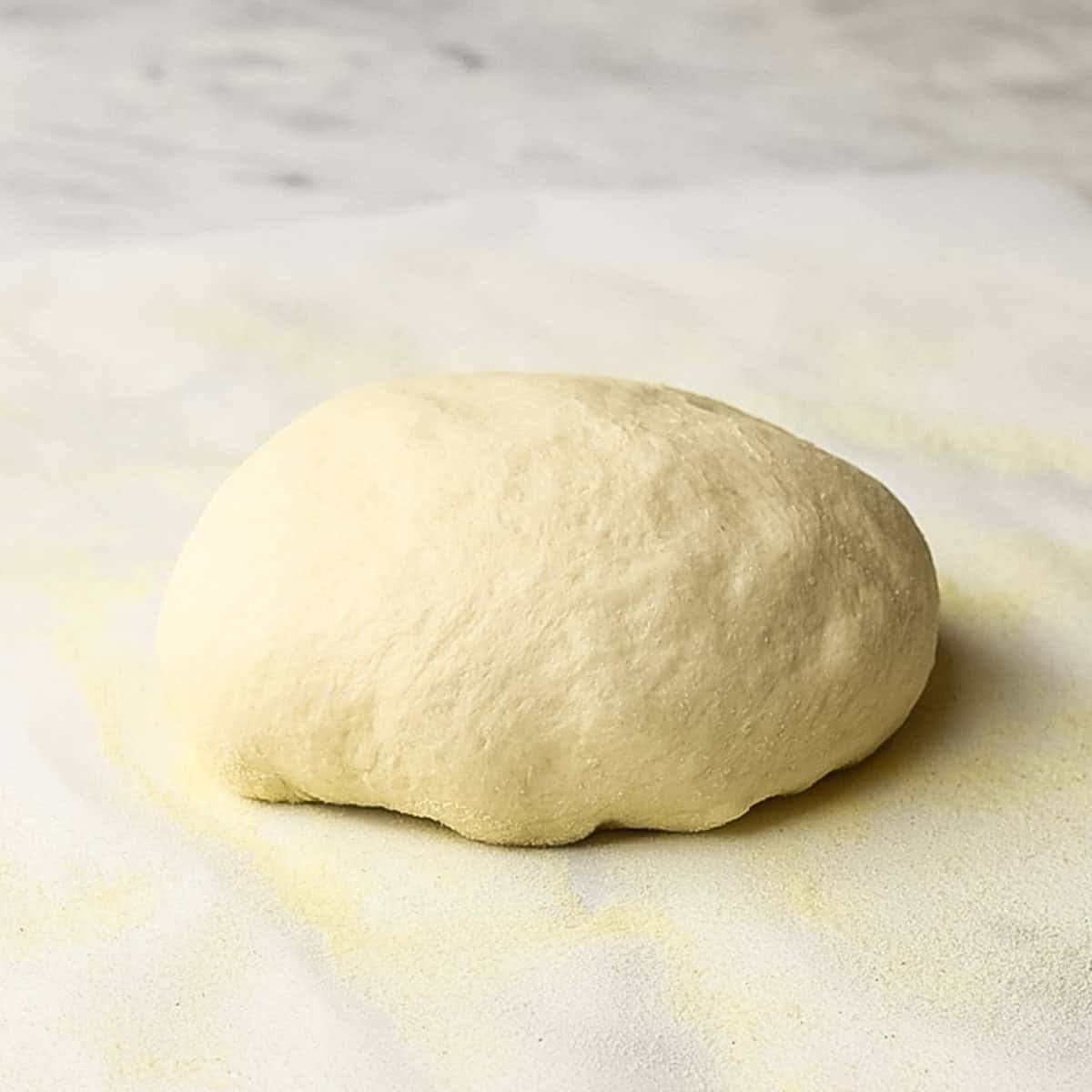
I think thin crust pizza gets a bad reputation sometimes because people assume “thin” means dry, hard, or lacking flavor. But that’s absolutely not the case with this recipe.
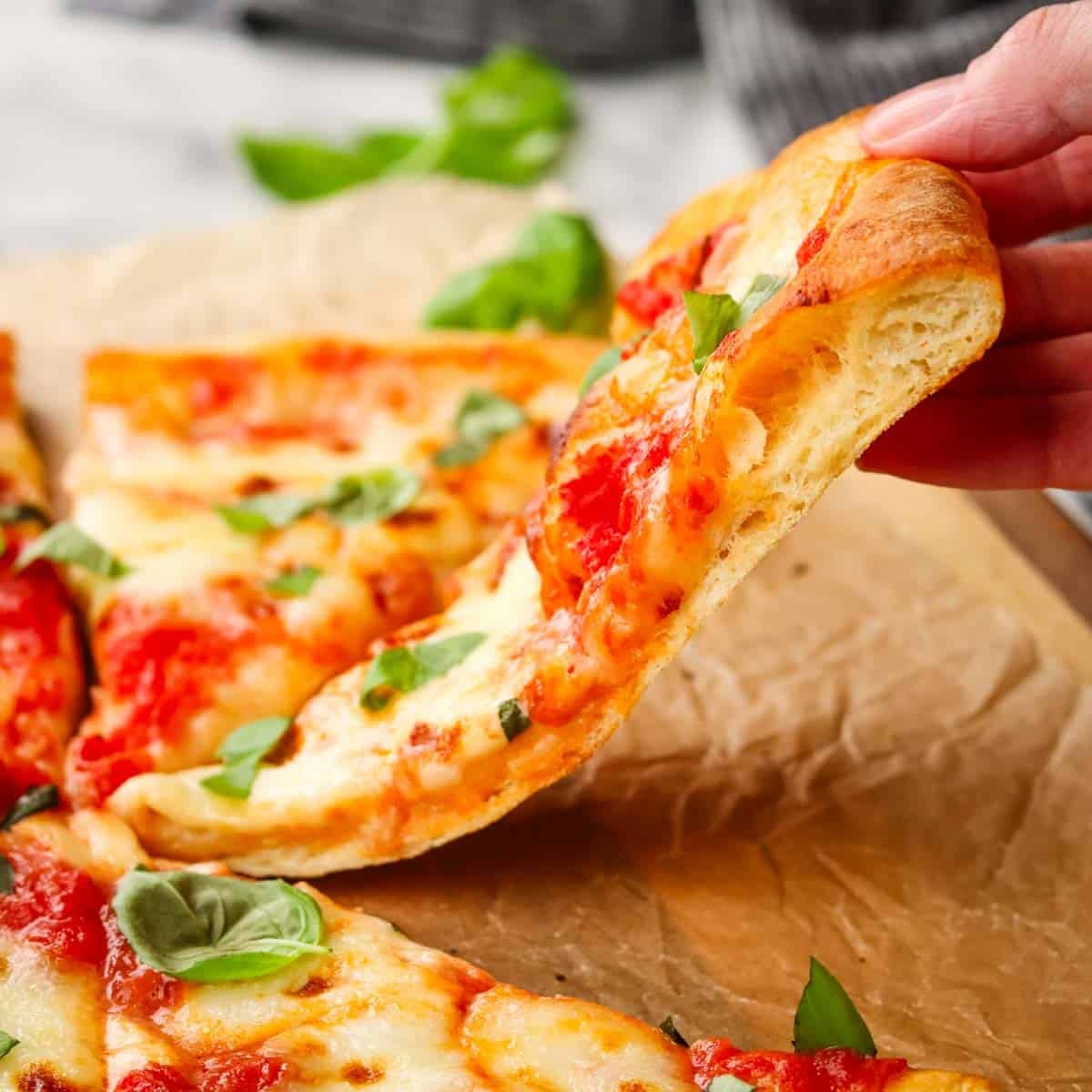
This crust gets perfectly crisp on the bottom so it actually holds the sauce and toppings without going limp, while the inside stays soft and chewy. The edges turn beautifully golden with just the right amount of bite.
Ingredient Notes
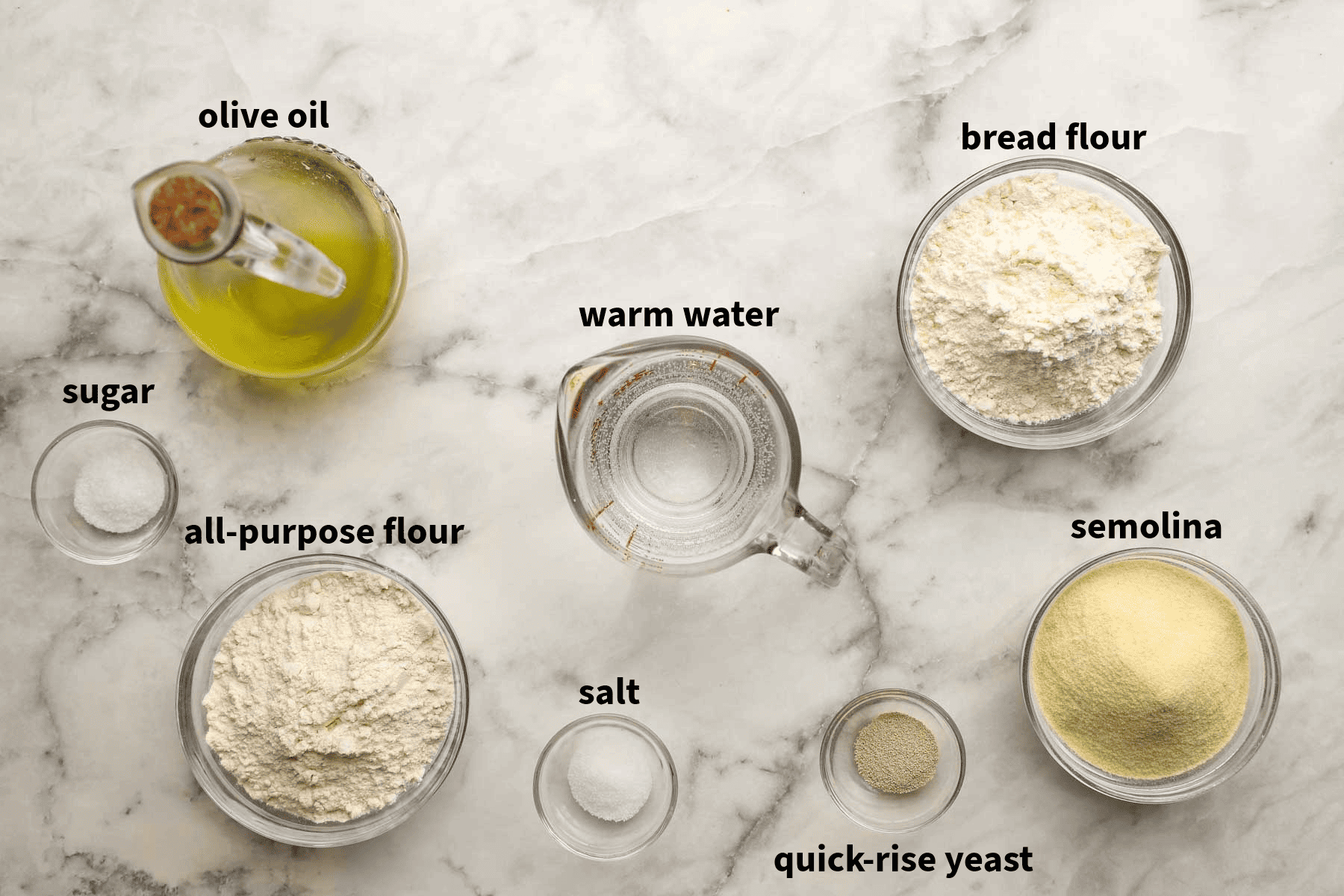
A few simple pantry ingredients are all it takes to make this dough.
The Flour Blend
This dough includes all-purpose flour, bread flour, and semolina flour. I can tell you that each and every one of them plays a crucial role in the finished crust.
All-purpose flour makes the dough workable and gives it structure, while the bread flour makes for a uniquely chewy texture. I’ve played around with the proportions a lot and one cup of each gives me the best texture.
But the real difference? Semolina.
If you’ve never worked with semolina flour, it’s a wheat flour, just like bread and all-purpose flour, but it’s more coarsely ground and ideal for making pasta. It’s also ideal for adding taste, texture, and a chewy bite to pizza dough.
Yeast and Sugar
Easy-to-use instant yeast (also known as “bread machine” or “quick rise” yeast) means no fussing with activating the yeast first. The sugar is used to provide fuel for the yeast as well as to brown the crust.
That said, if you only have active dry yeast on hand, or just prefer to use that, no problem. You will just combine the yeast, warm water and sugar first, give it a few minutes to get bubbly and then combine that with the remaining ingredients. Your dough will need additional rising time.
Warm Water
Aim for 95-105F for the water (a little warmer – 100F-110F – if using active dry yeast). I don’t usually find it necessary to use a thermometer, but it should feel lukewarm to the touch, just a little warmer than your body temperature.
If the water is too hot, it will kill the yeast, but cold water will keep it from activating.
Olive Oil and Salt
Olive oil is used to coat the bowl and dough.
Don’t forget the salt, absolutely crucial for flavor!
Don’t forget to watch the video!
Most of my recipes include a short step-by-step video tutorial. Just scroll down to the recipe card, or use the “Jump to Video” button at the top of the post!
Step-by-Step Instructions
Mix the Dough
Want to SAVE this recipe?
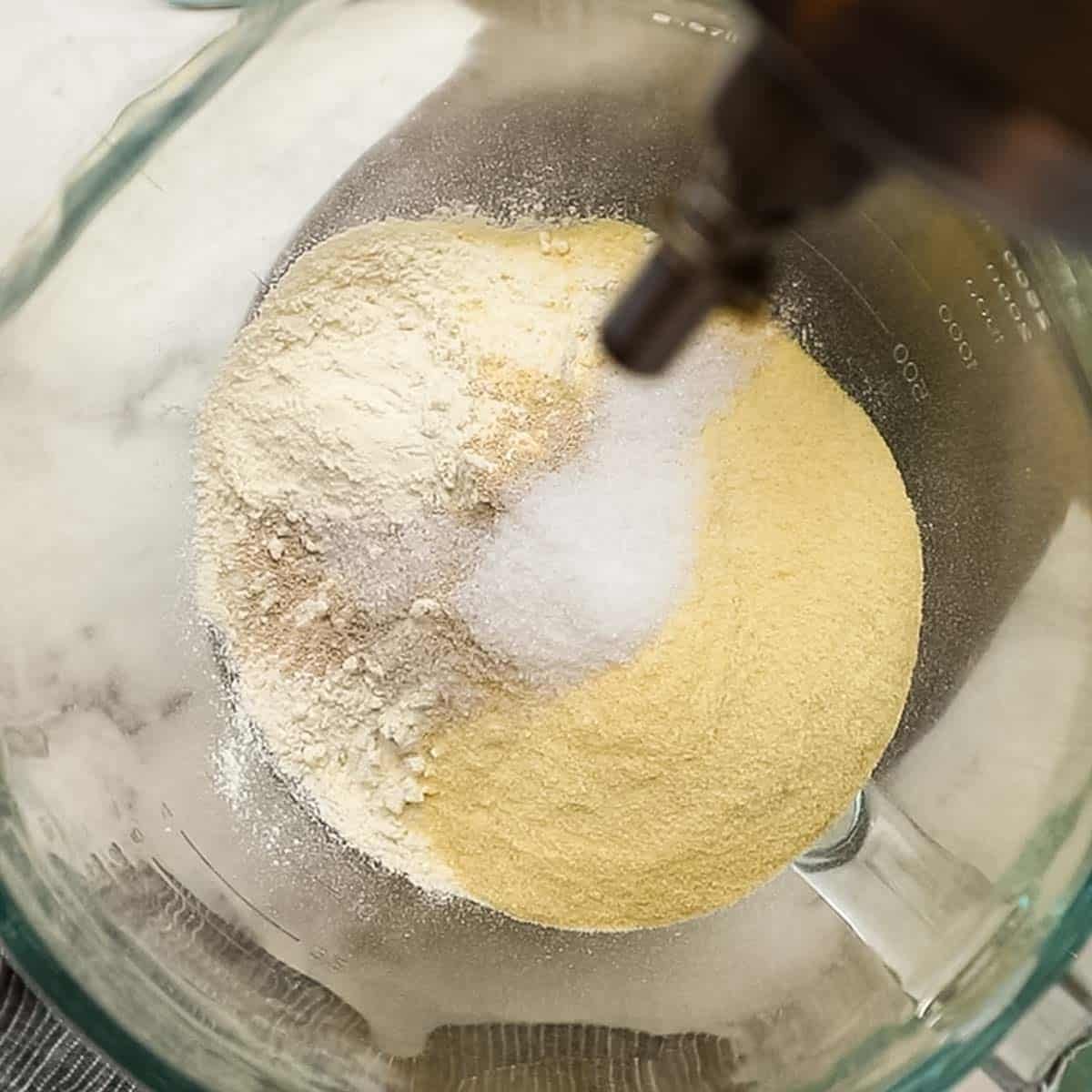
- Place the flour, bread flour, semolina flour, yeast, sugar, salt in the bowl of your stand mixer and whisk together.
- Stir in the warm water until it starts to come together into a rough dough.
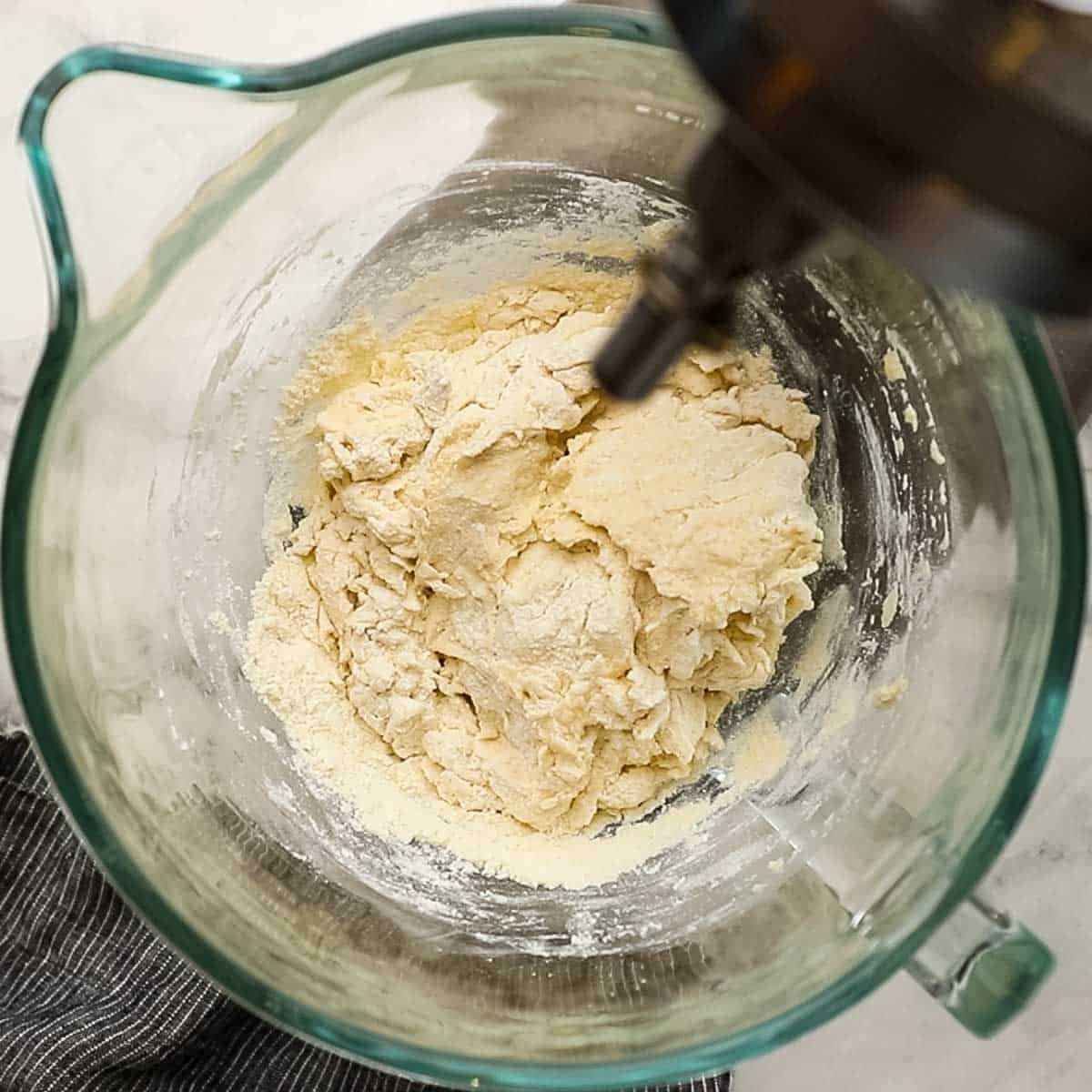
- Fit the dough hook to the stand mixer and mix on low speed for about 5 minutes until the dough comes together in a smooth ball. The dough should still be a little sticky and will stick to the bottom of the bowl, but if it will not come away from the sides at all, add more flour, one tablespoon at a time, mixing until it comes together. Do not add too much flour or the crust will be tough!
Let the Dough Rise
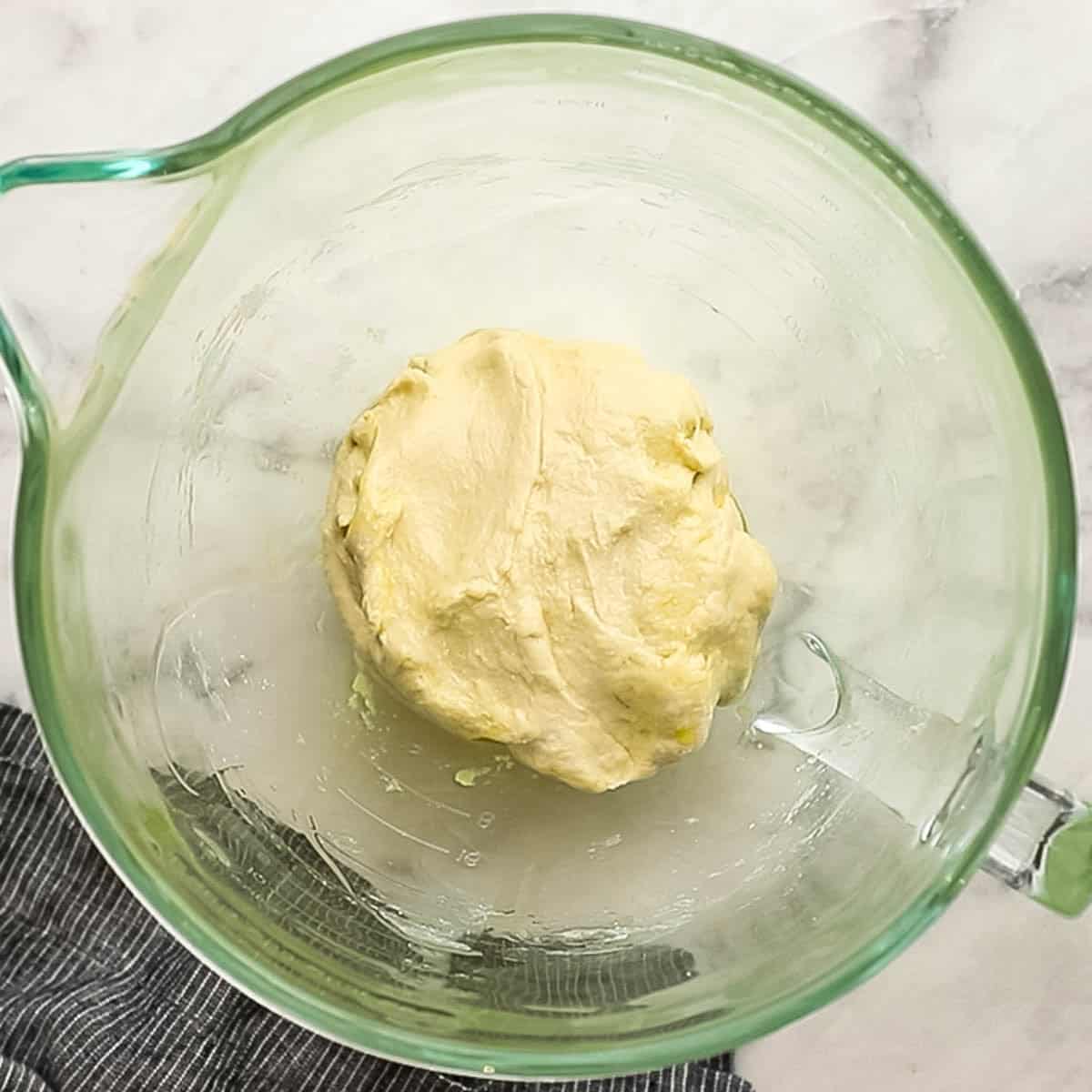
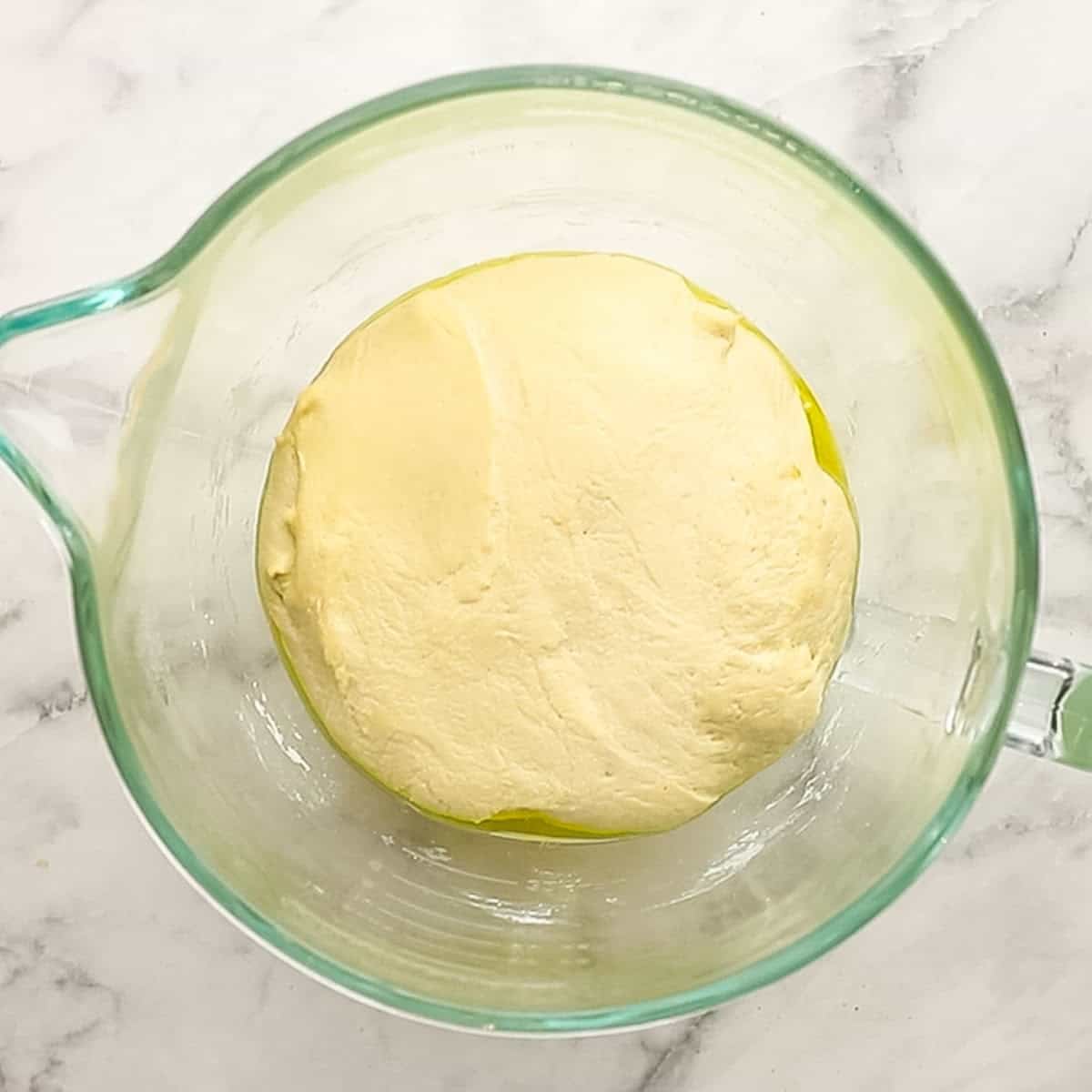
- Drizzle a little olive oil around the inside of the bowl and gently shape and roll the dough to coat in the oil. Put the bowl, loosely covered with a tea towel, in a warm place and allow the dough to rise over a period of about 2 hours, until doubled in size.
Preheat the Oven
- Towards the end of the rising time, place a pizza stone on the middle rack of the oven, and preheat the oven and pizza stone to the highest temperature it will go (mine goes to 550F). Alternatively, you can use a 16-inch or larger pizza pan. Regardless of the surface used, preheating it will give the best results, giving you a crust with a crispy, not doughy bottom.
Roll It Out
- Once your dough has doubled in size, punch the dough down and form it back into a ball. Sprinkle a little semolina onto a large piece of high-heat parchment paper (you really need good quality high-heat parchment paper here, otherwise it may burn, char, and/or disintegrate).
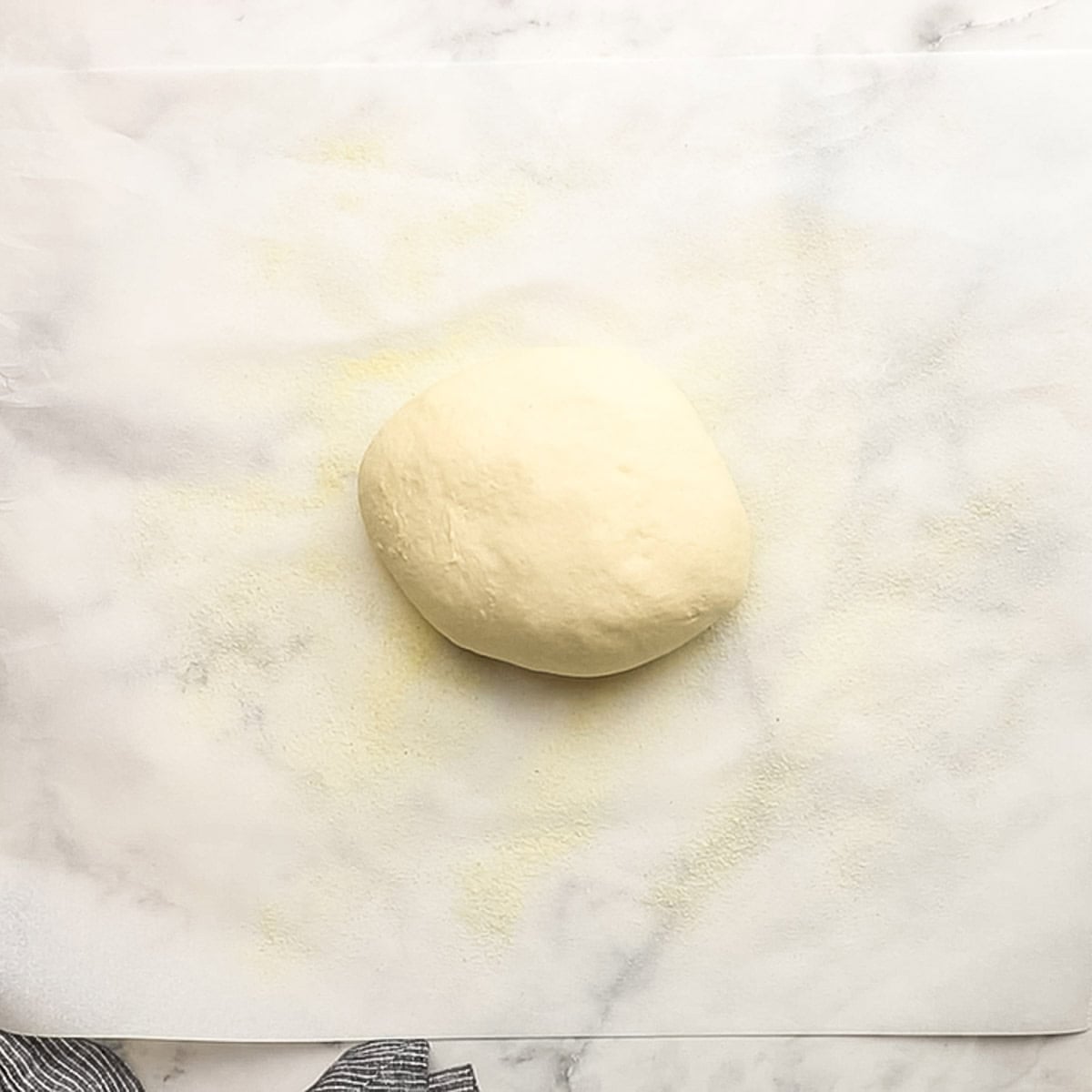
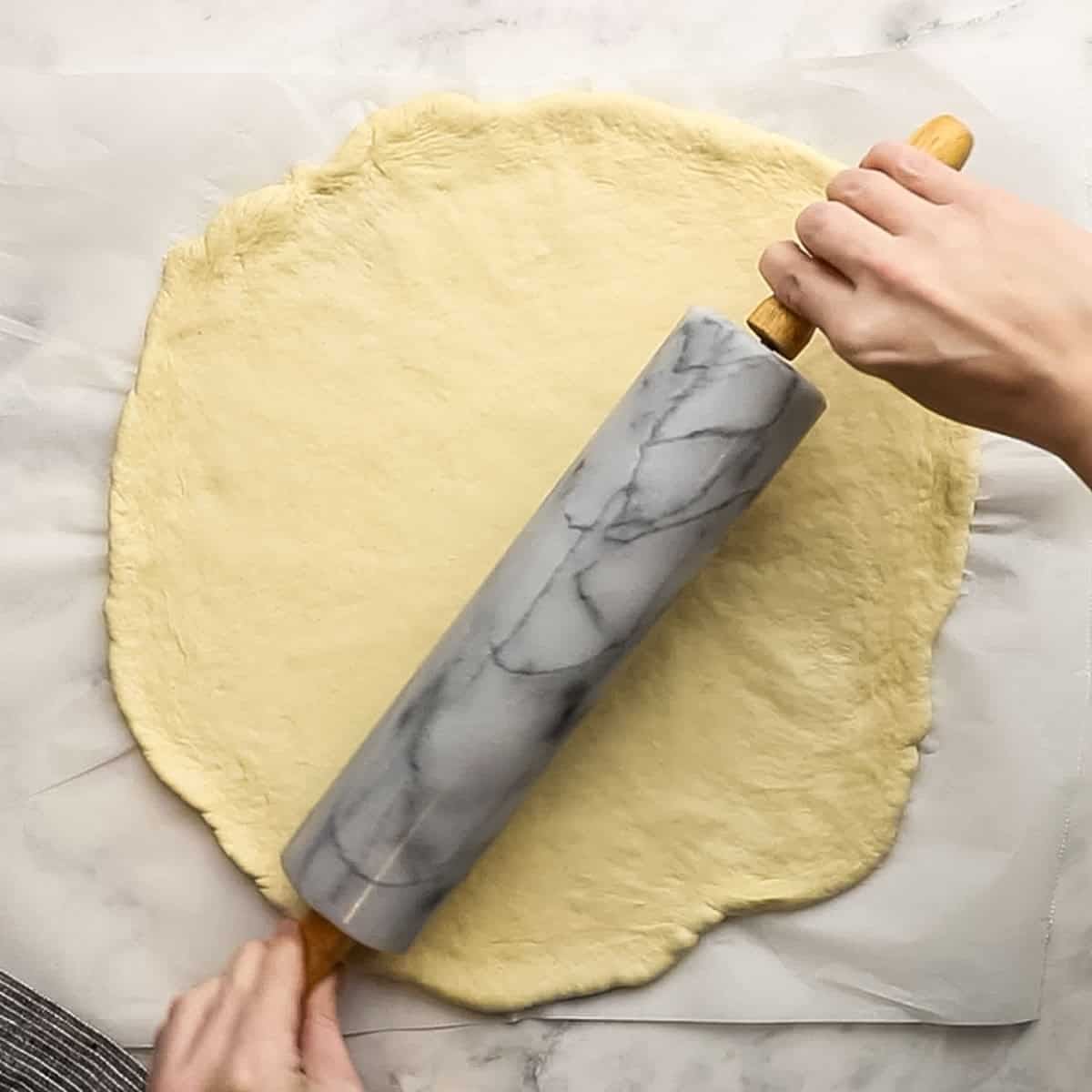
- Using a rolling pin, roll the dough as thinly as you can, into a large circle, about 14-16 inches wide. If the dough resists stretching, let it rest for a few minutes and keep rolling. Add your sauce and toppings.
Bake
- Using the parchment paper to lift, transfer the pizza and parchment paper to a pizza peel, wooden cutting board, or the back of a large baking sheet (or transfer it to a pre-heated pizza pan). Open the oven door and carefully slide the pizza and parchment onto the hot baking stone, or just transfer the pizza pan to the oven.
- Bake for 8-12 minutes or until golden brown and cooked through. The time will depend on how hot your oven is, just make sure the crust is nicely browned on the bottom.
Helpful Tips & Notes
If using active dry yeast, mix with warm water and sugar in a bowl and let sit until frothy (10 minutes or so) before adding to the dry ingredients. Your dough will likely take a little longer to rise than if using instant yeast. If your yeast doesn’t bubble, it is likely because it is dead or inactive, and you will need to start over with fresh yeast.
I also recommend using good-quality high-heat parchment paper to make transferring the pizza a breeze and less frustrating. The paper will darken when baked, but that is totally normal. Alternatively, you can forget the parchment paper altogether and instead shape the pizza on a well-floured pizza peel and then slide it straight onto the hot pizza stone to cook.
Topping Ideas
- A traditional margherita pizza is perfect for this thin crust.
- Classic pepperoni pizza is always my kids’ first choice.
- My personal favorite vegetarian pizza is this Mediterranean Pizza with marinated veggies.
- If you want try something different try this artichoke and sun dried tomato pizza with boursin!
- Buffalo chicken pizza is another fun variation perfect for game day.
Storage
How in the world did you have leftover pizza?! Well, lucky you. We never seem to have any leftovers at my house because everyone ends up eating twice as much pizza as they would normally eat of regular food! However, when you DO have some leftover slices, they keep really well.
Fridge: Keep in an airtight container for up to 3 days. Pizza reheats well in the oven or toaster oven to keep the base crispy, but I often use the “pizza” setting on my microwave too.
And cold leftover pizza straight from the fridge? Not my thing, but you do you!
Tell me what you think!
If you try this recipe, l’d be so grateful if you’d leave a comment and a rating in the recipe card. I love to hear your feedback, and your tips can help other readers too!

Thin Crust Pizza
Ingredients
- 1 cup all-purpose flour
- 1 cup bread flour
- ½ cup semolina coarsely ground wheat flour
- ¾ teaspoon quick rise yeast* ("instant" or "bread machine" yeast)
- 1 teaspoon sugar
- 1 teaspoon kosher salt
- 1 cup warm water (around 95-105F)
- Olive oil for coating the bowl
Instructions
- In the bowl of a stand mixer, whisk together the flours, semolina, yeast, sugar and salt.
- Add the warm water and stir, just until it starts to come together.
- Fit the dough hook to the stand mixer and mix on low speed for about 5 minutes until the dough comes together in a smooth ball. The dough should still be a little sticky and will stick to the bottom of the bowl, but if will not come away from the sides at all, add more flour, one tablespoon at a time, mixing until it comes together. Do not add too much flour or the crust will be tough.
- Drizzle a little olive oil down the inside of the bowl and roll the ball of dough around to coat the dough and the inside of the bowl.
- Cover the bowl with a tea towel and put in a warm place to rise for about 2 hours, until doubled in size.
- Towards the end of the rising time, place a pizza stone on the middle rack of the oven, and preheat the oven and pizza stone to the highest temperature it will go (mine goes to 550F). Alternatively, you can use a 16 inch or larger pizza pan. Regardless of the surface used, preheating it will give the best results, giving you a crust with a crispy, not doughy bottom.
- Once it has doubled, punch the dough down and form it back into a ball. Sprinkle a little semolina onto a large piece of high-heat parchment paper*. Using a rolling pin, roll the dough as thinly as you can, into a large circle, about 14-16 inches wide. If the dough is snapping back as you try to shape it, let it rest a few minutes and keep rolling. You may need to repeat this a few times, if your dough is a little cool. Add your sauce and toppings.
- Using the parchment paper to lift, transfer the pizza and parchment paper to a pizza peel, wooden cutting board, or the back of a large baking sheet (or transfer it to a pizza pan). Open the oven door and carefully slide the pizza AND parchment onto the hot baking stone, or just transfer the pizza pan to the oven.
- Bake 8-12 minutes until golden and cooked through. Time will depend on how hot your oven is, and on whether you are baking on a preheated stone or using a pizza pan.